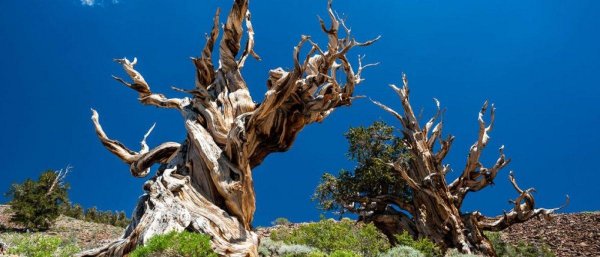
At 4,845 years old, Methuselah, a Great Basin bristlecone pine in California's White Mountains, has witnessed the rise and fall of civilizations. Yet this ancient survivor now faces a threat unlike any before: a warming climate that could push its species to the edge of extinction.
According to a new study by ecologists at the University of California, the very conditions that allowed bristlecone pines to thrive for millennia are shifting. As temperatures rise, the tree line on the mountains is moving upward, and a rival species—limber pine—is better equipped to claim those new territories.
“Whoever can get there first wins,” said Brian Smithers, co-author of the study. “And it looks like limber pine is just better able to get there quicker.”
Limber pines, whose seeds are spread by birds, are colonizing higher elevations faster than bristlecones can. Once established, they compete for light and water, edging out the slower-growing bristlecones. The bristlecones left behind in lower, warmer zones may then succumb to less hospitable conditions.
Why the Loss Matters Beyond One Species
The threat extends far beyond the bristlecone pine. A 2012 report in ThinkProgress documented a sharp rise in mortality among trees aged 100 to 300 years across forests, woodlands, and even urban areas worldwide. That trend has prompted researchers to call for a better understanding of the causes and for immediate management strategies.
More recent projections, published in Nature World News, indicate that the U.S. Southwest could see a 75 percent drop in tree growth rates by 2050. Such a decline would severely weaken forests' ability to absorb carbon dioxide, undermining a natural buffer against climate change.
“I think what’s going to happen — at least in some areas — is that we’re going to lose bristlecone,” Smithers said.
Living Records Under Pressure
These trees are more than just biological specimens; they are living archives of environmental history. Methuselah was already a seedling when the Egyptian pyramids were being built, and it has endured wars, cultural shifts, and extreme weather. Losing such trees would erase irreplaceable records of past climate conditions.
While the study focuses on California, the implications are global. As the planet warms, many tree species face similar pressures, and the loss of old-growth forests could accelerate biodiversity decline. The researchers emphasize that proactive conservation efforts are needed now to preserve these ancient organisms and the ecosystems they support.
The fate of the bristlecone pine may ultimately depend on whether limber pines can be managed and whether climate change can be slowed. But time, like the trees themselves, is running out.