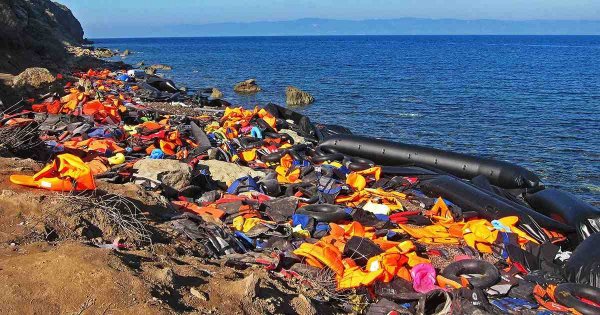
A study published Monday in the journal Global Environmental Change provides the first concrete evidence that climate change is not just associated with but directly causes migration and conflict around the world. Conducted by the International Institute for Applied Systems Analysis (IIASA), the research examined contemporary case studies, including Syria's civil war, and found that reduced rainfall—a direct result of climate change—drives conflict in areas where resources become scarce.
The findings address a long-standing hypothesis in ecology: when animals face habitat destruction, they either adapt, migrate, or starve. Researchers have speculated that humans in climate-affected regions face the same dilemma, but until now, the link was largely theoretical. This study, however, establishes a causal chain: climate change leads to resource scarcity, which fuels conflict, which in turn forces people to flee their homes as refugees.
In Syria, for example, prolonged droughts and declining rainfall—attributed to climate change—exacerbated agricultural failures and water shortages. These conditions, combined with existing social and political tensions, contributed to the outbreak of civil war. The resulting violence then displaced millions, creating a wave of climate-driven refugees.
Why This Research Matters
The study's authors note that while the link between climate and migration has been widely discussed, this is one of the first efforts to systematically validate it with empirical evidence. The research also highlights a secondary effect: in some historical cases, the influx of refugees into new areas has led to overcrowding and increased tensions, sometimes sparking further conflict. However, the researchers acknowledge that this particular connection was not thoroughly investigated.
The broader implication is stark: as human-caused climate change continues to make parts of the world uninhabitable—through decreased rainfall, extreme temperature rises, and disruptions to the food web—more people will be forced to choose between adapting to worsening conditions or seeking asylum elsewhere. For those in the most affected regions, adaptation may not be a viable option, leaving migration as the only survival strategy.
The study comes at a time when climate refugees are already emerging in various parts of the world, including the United States, where a wave of climate-driven displacement is anticipated. The findings add urgency to calls for global action, as world leaders face the challenge of addressing both the root causes of climate change and the humanitarian crises it triggers.
While the research does not predict specific future migration patterns, it underscores the need for policy responses that account for climate-induced displacement. As the planet continues to warm, the link between environmental stress and human movement will likely become even more pronounced, making this study a critical reference point for policymakers and humanitarian organizations alike.