New analysis of a tiny meteorite fragment that landed in Sudan has led researchers to propose that a dwarf-planet-sized object, rich in water, once circled the Sun during the solar system's infancy. The finding, published Monday in the journal Nature Astronomy, stems from the discovery of an unusual crystal structure inside the space rock—a structure that could not have formed under the conditions typical of a small asteroid.
The crystal, a hydrated form known as amphibole, requires prolonged exposure to heat and pressure far beyond what a normal meteorite would experience. According to the international team behind the study, the only plausible explanation is that the fragment broke off from a much larger body—one comparable in scale to Ceres, the largest object in the asteroid belt.
“Some of these meteorites are dominated by minerals providing evidence for exposure to water at low temperatures and pressures,” said lead author Vicky Hamilton, a planetary geologist at the Southwest Research Institute, in a press release. “Our surprising result suggests the existence of a large, water-rich parent body,” she added in a separate statement.
The research adds a new piece to the puzzle of how the solar system evolved. The team speculates that the giant parent object is long gone, possibly shattered or consumed in the chaos of the early solar system, which would explain why only fragments have reached Earth.
Clues From a Desert Fall
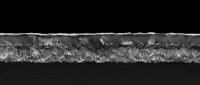
The story begins with an asteroid that exploded over Sudan, scattering fragments across the Nubian Desert. One of those fragments, allocated to the study, became the focus of intense scrutiny. Under microscopic analysis, the amphibole crystals stood out as a clear anomaly—a mineral signature that points to a history of high-pressure, high-temperature conditions.
Amphiboles are rare in meteorites, and their presence here suggests that the parent body was large enough to generate the necessary internal heat and pressure over millions of years. This is not the first time scientists have suspected that the early solar system contained objects larger than today's asteroids, but it is among the most direct evidence yet.
The findings also hint at a more dynamic and varied solar system than previously assumed. If a dwarf-planet-sized, water-rich body once existed, it could have played a role in delivering water to the inner planets, including Earth. However, the researchers caution that the object's fate remains unknown.
“This is more evidence that the solar system's composition has changed immensely since its birth four and a half billion years ago,” the study notes, underscoring the transformative processes that shaped our cosmic neighborhood.
The study, led by the Southwest Research Institute, is part of a broader effort to understand the origins of water on Earth and the diversity of planetary building blocks. While the exact nature of the vanished parent body remains speculative, the crystals offer a tangible clue that the early solar system was home to objects far larger and more complex than what we see today.