TEL AVIV — In a modest office above the bustling streets of Tel Aviv, a team of engineers and neuroscientists is working on a bold proposition: teach machines to see the world with the same ease and nuance as humans. The company, Cortica, is betting that its unique approach to artificial intelligence — one that prioritizes transparency and mimics the brain's own visual processing — will set it apart in a crowded and often opaque field.
Cortica is among hundreds of startups that have emerged in recent years as the global AI market has surpassed the billion-dollar mark, drawing the attention of tech giants eager to reposition themselves as AI-first companies. But the sector is notoriously difficult to navigate, with many firms relying on buzzwords like 'machine learning' and 'neural networks' to obscure a lack of substance. Cortica's founders argue that their technology is different.
Unlike most machine learning systems, which operate as 'black boxes' where even their creators cannot fully explain their internal decisions, Cortica's system is designed to be transparent and verifiable. It is built on a branch of AI known as unsupervised learning, which allows algorithms to classify and represent data without human guidance. This is a departure from the more common supervised learning models, which require extensive human labeling and are slower to adapt.
The company was founded by Professor Josh Zeevi and two of his doctoral graduates, Igal Raichelgauz and Karina Odinaev, all from the Technion — Israel Institute of Technology. Israel, a country of just over 8 million people, has become a global hub for tech innovation, with more companies listed on the New York Stock Exchange than any other nation except the United States and China. Half of those Israeli firms trace their origins to Technion, a fact that underscores the institution's role in the country's tech ecosystem.
Zeevi is confident about the potential of Cortica's technology. "There is no objective reason why computers should not do better than the human brain," he said. "Although no one is there yet, Cortica will get there." The company, which also has offices in New York and Beijing, believes it has reverse-engineered the biological visual cortex, the part of the brain that processes visual information.
How the Brain's Visual System Works
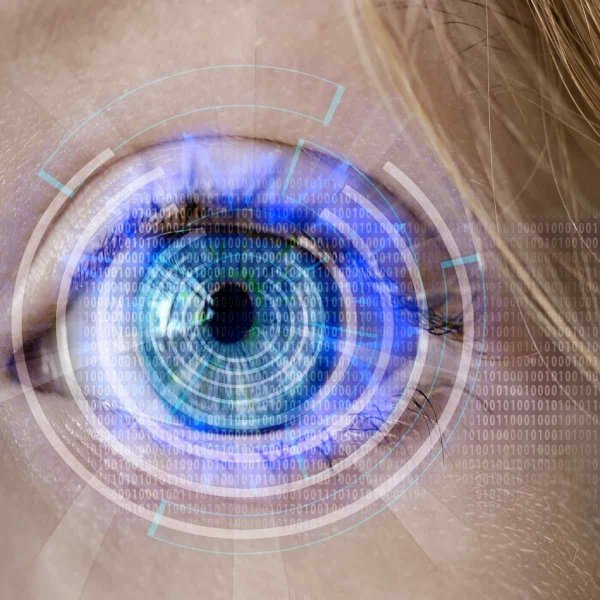
When the eyes open, light waves are converted into electrical signals that travel to the brain's visual cortex. There, the brain sorts and analyzes an immense amount of data — size, shape, depth, and color — and compares it to every object it has ever encountered. This process happens tens of times per second, creating the sense of motion and enabling recognition. Cortica's technology is based on the concept of 'cliques,' groups of neurons that fire together to represent a specific visual concept. The company has built a database of these cliques, compressed into signatures that can be matched against new visual input.
The potential applications are broad. Cortica's visual system could improve security cameras, autonomous vehicles, satellite imagery, and medical diagnostics. But the company sees this as just the beginning. With a machine that can see, combined with advances in natural language processing, AI would have the fundamental components needed to understand and interact with the world. That could pave the way for artificial general intelligence (AGI), a system that can take in a variety of inputs and produce a variety of outputs, much like a human.
While many companies claim to be on the verge of achieving human-level vision, Cortica argues that its transparent, unsupervised approach gives it an edge. Whether it will succeed remains to be seen, but the company's founders are convinced that their method, grounded in the biology of the brain, is the right path forward.