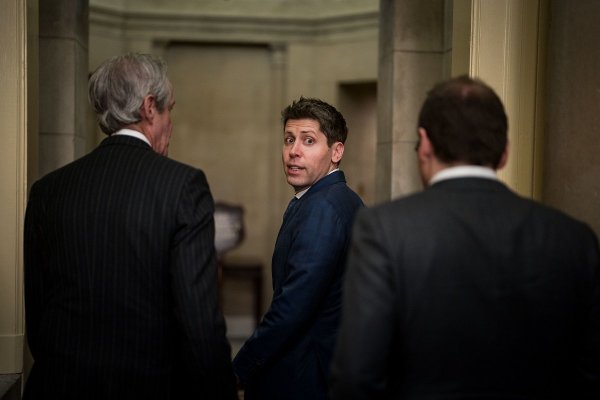
OpenAI's chief executive, Sam Altman, has issued a public apology and promised to overhaul the company's departure paperwork after reports revealed that former employees were required to sign strict nondisclosure agreements to retain their vested equity. The admission came amid a week of mounting criticism for the artificial intelligence lab, which has faced scrutiny over both its safety commitments and its treatment of departing staff.
In a series of posts on X, Altman acknowledged that a clause in previous exit documents allowed for the cancellation of vested equity if employees did not sign a separation agreement or a non-disparagement clause. He stated that while the company never actually clawed back any equity, the provision "should never have been something we had in any documents or communication." Altman called the situation "one of the few times I've been genuinely embarrassed running OpenAI," adding that he was unaware of the policy until recently and that the team was already in the process of revising the standard exit paperwork.
The controversy stems from a Vox report detailing the restrictive agreements, which also barred former employees from criticizing the company. The report fueled concerns that OpenAI was silencing voices with ethical reservations about its work, particularly in the realm of AI safety. The timing was especially awkward, as two researchers who had been part of OpenAI's superintelligence control team had recently left the company under circumstances that appeared to blend forced departure and voluntary resignation. One of them publicly criticized OpenAI's perceived lack of dedication to safety research.
Altman's response focused primarily on the equity issue, offering to personally address concerns from any former employee who signed one of the old agreements. However, he did not directly address the broader question of whether former employees are now free to speak openly about the company's safety practices. OpenAI's president, Greg Brockman, also issued a lengthy statement co-signed by Altman, but it largely reiterated general commitments to rigorous testing, security, and collaboration with governments, without specifying concrete changes to the exit agreement policy.
Unresolved Questions on Employee Speech
The statements from Altman and Brockman have left observers wondering whether the company intends to fully lift restrictions on former employees' public commentary or merely defuse the immediate backlash. The distinction matters, as OpenAI's work on advanced AI systems has drawn intense public and regulatory interest, and the ability of former insiders to speak candidly is seen as a check on the company's power.
This episode adds to a difficult week for OpenAI, which began with the unveiling of its new ChatGPT 4o model. While the technology impressed many, Altman's comparison of the AI's voice to the film "Her" sparked negative headlines. The combination of technical achievements and public relations missteps has put the company under a spotlight, with critics questioning both its strategic decisions and its internal governance.
As OpenAI moves to revise its exit paperwork, the broader implications for corporate accountability and AI safety remain a focal point. The company has not yet clarified whether the new agreements will allow former employees to discuss their concerns without penalty, leaving a key question unanswered for those watching the company's evolution.