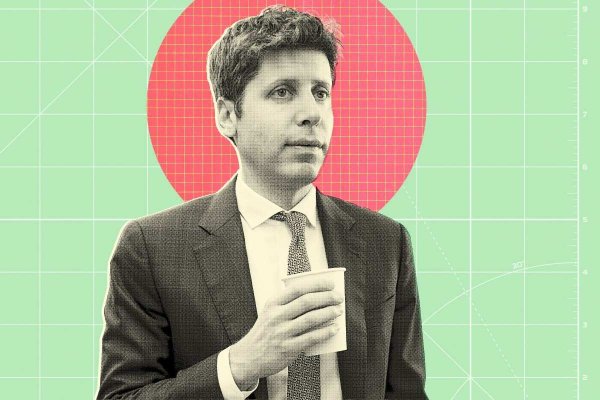
OpenAI's chief executive, Sam Altman, publicly conceded that the latest iteration of ChatGPT, GPT-5.2, has underdelivered in writing proficiency, acknowledging a misstep that has reignited debates about the trajectory of large language models.
During a developer town hall on Monday, Altman admitted, “I think we just screwed that up,” referring to the model's language capabilities. He assured attendees that future versions of GPT 5.x would be “hopefully much better at writing than 4.5 was,” signaling a course correction after the company's recent prioritization of technical prowess.
Altman explained that the decision to concentrate on “intelligence, reasoning, coding, engineering” in GPT-5.2 was deliberate, but it came at a cost. “We have limited bandwidth here, and sometimes we focus on one thing and neglect another,” he said, acknowledging the trade-off that has left many non-technical users feeling shortchanged.
The admission arrives just over three years after ChatGPT's debut as the first commercially available LLM chatbot. While the model has improved since then, the perceived stagnation in recent versions has fueled concerns that AI development may be hitting a plateau.
Critics point to tangible regressions. Data scientist and tech blogger Mehul Gupta, in a review of GPT-5.2, highlighted a “flatter tone,” diminished translation accuracy, inconsistent behavior across tasks, and notable failures in “instant mode,” a feature designed for quick responses to simple queries. Gupta also documented struggles with real-world documents—contracts, mixed-format notes, and PDFs—where the model “forgot earlier details, contradicted itself, misread cross-references, and hallucinated clarifications that didn't exist.”
“Benchmarks are clean,” Gupta observed. “Real documents are not. 5.2 still struggles with the noise of reality.”
The release of GPT-5.2, which was heavily promoted for its coding and spreadsheet-formatting abilities, marked a stark departure from earlier versions that emphasized creative and writing tasks. That pivot, as noted by Search Engine Journal, has left a segment of users questioning whether frontier models can maintain a broad skill set or if specialization inevitably narrows their utility.
Why This Matters
Altman's concession is more than a mea culpa; it underscores a strategic dilemma facing AI developers. As models are scaled and refined, the balance between raw computational power and human-centric language skills becomes a critical design choice. For users who rely on ChatGPT for writing, translation, or document analysis, the current iteration's shortcomings are not abstract—they affect daily workflows.
The promise of improved writing in future 5.x versions offers a potential remedy, but it also raises the question of whether the next update will simply shift the trade-off in the opposite direction. For now, the community watches closely, aware that the race for intelligence may have inadvertently left language behind.